IT & Development
Vision AI Attendance
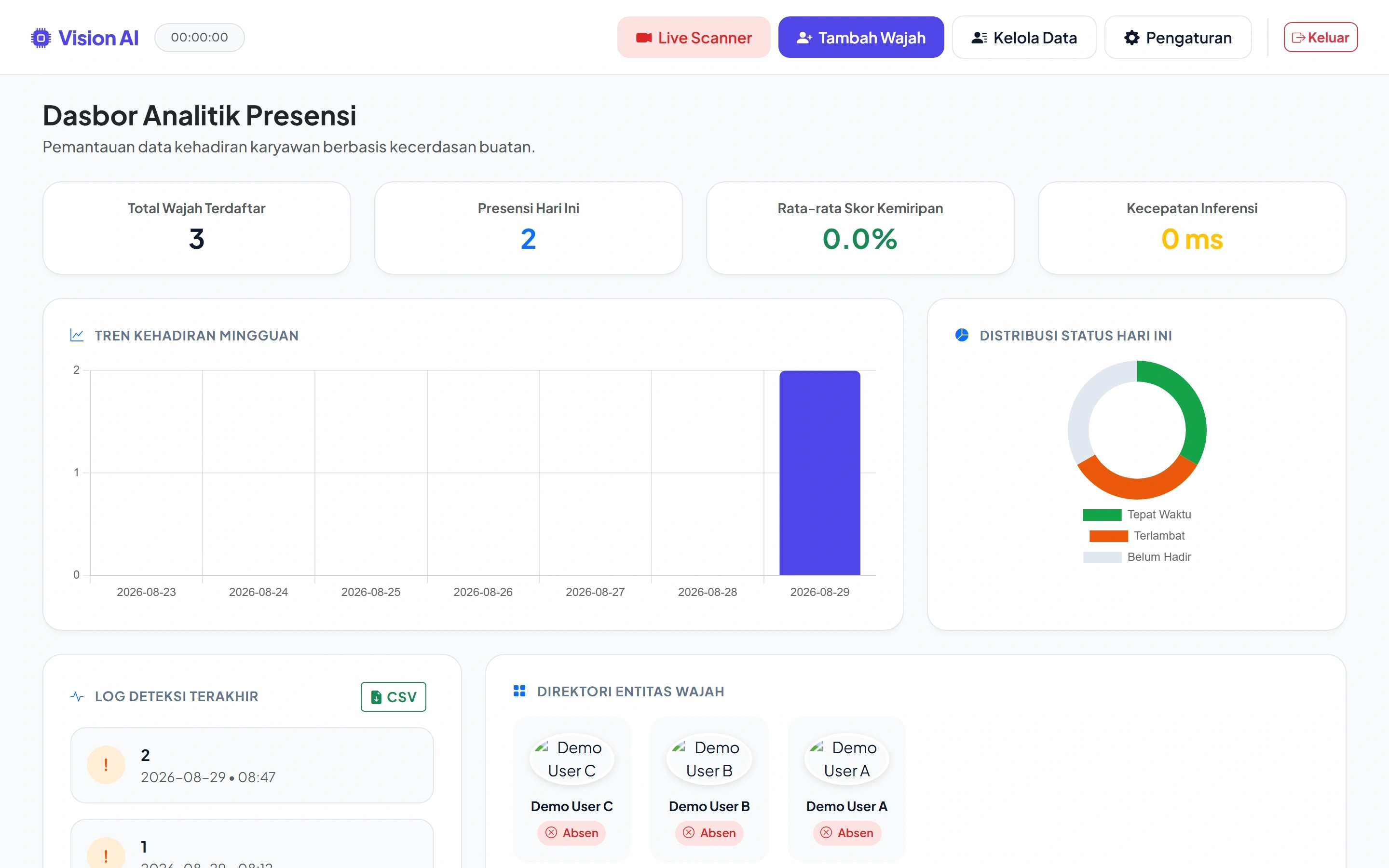
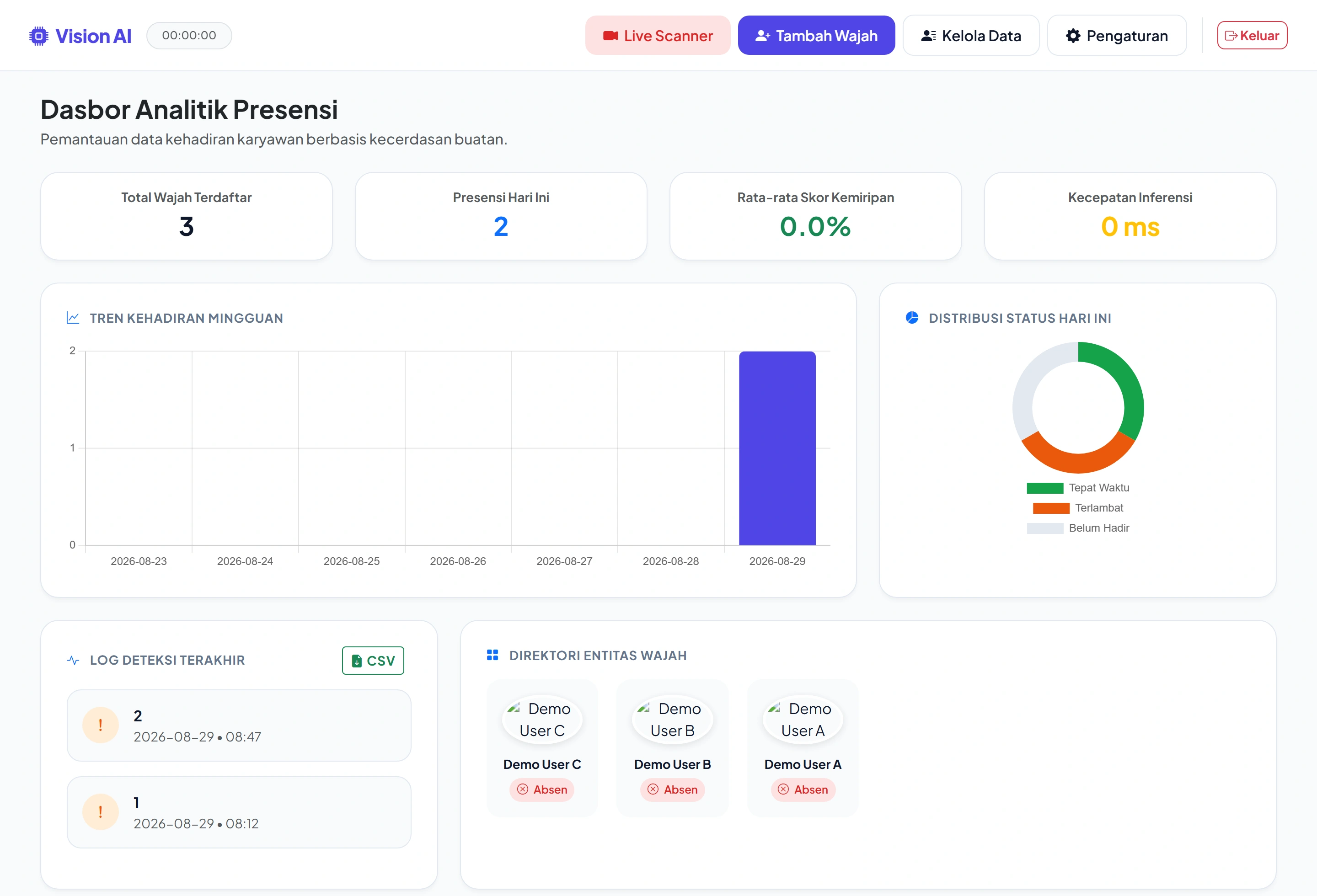
Vision AI is a web-based attendance verification system that combines face recognition, guided multi-sample enrollment, and hybrid liveness checks. The project evolved from an academic single-reference prototype into a more efficient and testable V2 focused on recognition robustness, clearer enrollment guidance, and evidence-based performance evaluation.
- Computer Vision & Web Developer
- Akademik
- 2026
- Python, Flask, OpenCV, Dlib, SQLAlchemy, Chart.js


Case Study
01 / PROBLEM
Face-based attendance needs to solve more than simply detecting a face. The initial prototype relied on a single reference image, repeated an expensive CNN detection step during alignment, and displayed a similarity value that could easily be mistaken for model accuracy. These limitations increased processing cost and made identity matching less robust when the user's pose or capture condition changed.
02 / PROCESS
I audited the complete computer-vision pipeline and measured individual processing stages before changing the architecture. A redundant CNN face-detection pass during alignment was removed through an optimized FAST_ALIGN path, and the original single-image registration flow was replaced with guided multi-sample enrollment across center, left, and right poses. The recognition pipeline now supports multiple reference embeddings per identity while remaining backward-compatible with legacy users. I also added enrollment quality gates, benchmark instrumentation, automated tests, and threshold-calibration tooling so matching and performance decisions can be evaluated from measured evidence rather than arbitrary percentages.
03 / RESULT
Vision AI V2 provides an end-to-end attendance workflow from guided face registration to identity matching, randomized liveness verification, duplicate-attendance prevention, and administrative analytics. Live development testing showed that removing redundant alignment detection substantially reduced processing cost in that stage, while multi-reference enrollment allows each identity to be represented across multiple poses without meaningful matching overhead at the current project scale. The remaining limitations of the system — including CPU cost, heuristic passive spoof detection, and limited threshold-calibration data — are documented explicitly instead of being hidden behind unsupported accuracy claims.
Project Gallery
Interested in working together?
Reach out to talk about a project, or see more of the work first.